How Career Counseling Helps You Find the Right Path
Choosing the right career is one of the most important decisions in life. Yet, many students and professionals feel confused about their future — struggling between passion, skills, expectations, and opportunities. Career counselling guides individuals toward clarity by understanding their unique strengths, interests, personality, and goals. With the support of a trained career counselling psychologist or mental health counsellor, a person can confidently plan a fulfilling and successful career path.
Signs You May Need Career Counseling
If career decisions feel overwhelming or directionless, counselling can be beneficial. Common signs include:
- Confusion about choosing subjects, stream or higher studies.
- Lack of confidence related to skills and performance.
- Academic stress or declining interest in studies.
- Workplace stress or dissatisfaction with job role.
- Negative thinking about future prospects.
- Difficulty balancing interests, passion & family expectations.
- Boredom or burnout in the current profession.
Seeking help early prevents wrong choices, emotional struggles, and career regrets later.
Causes Behind Career Confusion
Career dilemmas can arise from:
- Lack of self-awareness about abilities and personality traits.
- External pressure from family, society or peers.
- Limited knowledge about career options and future opportunities.
- Fear of failure or low motivation due to confidence issues.
- Mood disorders or anxiety influencing decision-making.
Understanding the cause helps the therapist guide individuals toward the right direction with clarity and strength.
How Career Counseling Helps You Choose the Right Path
A career counselling center or psychologist uses scientific tools and therapeutic strategies to assist individuals. Career counselling can:
- Identify strengths, talents and true potential.
- Match abilities with suitable academic or career paths.
- Boost confidence for interviews, public speaking and leadership roles.
- Address anxiety, depression and negative thinking affecting growth.
- Enhance social skills and workplace communication.
- Guide stream / course selection after 10th or 12th.
- Plan long-term goals for a stable and rewarding future.
- Promote personality development and emotional well-being.
Career decisions become easier when guided by knowledge, self-awareness, and expert support.
Procedure Used in Career Counseling
The scientific counselling process generally includes:
- Detailed Personal Interview — understanding interests, environment, motivation and challenges.
- Psychometric Analysis — standardized tests such as IQ testing, personality assessment, aptitude testing, learning-style evaluation, neuropsychological testing, or ADHD testing when needed.
- Career guidance sessions — informed suggestions on academic courses, job roles and professional options.
- Personality development counselling & confidence-building exercises.
- Mental well-being support — stress management, mood disorder interventions, anger management counselling.
- Follow-up sessions to track growth and career satisfaction.
This structured approach leads to clarity, motivation, and positive action.
Benefits of Career Counseling
- Informed decisions without confusion or regret.
- Higher confidence and self-belief.
- Improved academic or work performance.
- Reduced stress and positive outlook.
- Better communication and social skills.
- Future stability and motivation to achieve goals.
A clear direction leads to a brighter, more fulfilling future.
FAQs: Career Counseling for Students & Professionals
- Q: Who should go for career counseling?
Anyone facing confusion or stress about career plans — whether student or working professional. - Q: Is psychometric testing useful?
Yes, it helps scientifically measure aptitude, interests, personality and learning style for accurate career guidance. - Q: Can career counseling help with mental health?
Absolutely — it supports emotional well-being, confidence and mindset required for success. - Q: When should students consider counselling?
Ideally after 10th, 12th, graduation decisions or during any career transition phase.
About RRIMI BODALKAR – Sr. Psychotherapist in Nagpur
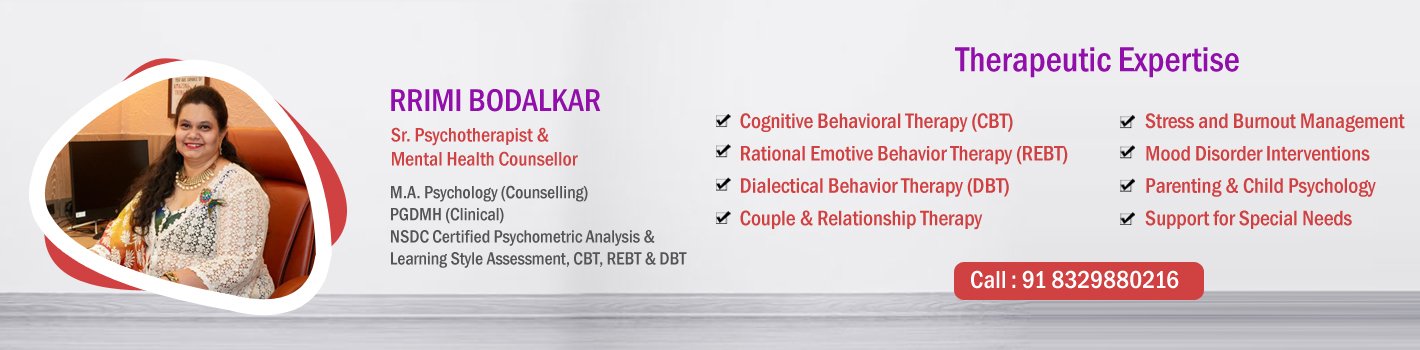
RRIMI BODALKAR is a highly experienced Sr. Psychotherapist and Mental Health Counsellor in Nagpur with M.A. Psychology (Counselling), PGDMH (Clinical), and NSDC Certification in Psychometric Analysis & Learning Style Assessment. She specializes in CBT, REBT & DBT and provides expert services in career counselling, depression therapy, confidence building counselling, negative thinking therapy, trauma therapy, personality assessment, executive coaching, public speaking anxiety treatment, parenting support, relationship counselling, couple therapy, support for special needs children and workplace stress counselling. Her guidance empowers individuals to discover their true strengths and build a successful and satisfying professional life.
With the right support, career confusion turns into career confidence — and therapy helps you walk your path with purpose, passion and success. Your dreams deserve the right direction.
